
Shed Security Tips: How to Protect Your Investment
A backyard shed is supposed to make life easier. It gives you extra space, keeps seasonal items out of the house, and creates a practical place for tools, lawn equipment, bikes, or hobby gear. But once a shed is filled with valuable contents, it can also become a target. That is why shed security matters more than many homeowners first realize.
A well-built shed already gives you a strong starting point. At The Shed Company, quality construction, durable materials, and careful installation are part of the package. Still, even a robust structure benefits from smart security upgrades. If you want to protect your investment in Southern Ontario, the best approach is to think in layers: stronger doors, better locks, improved lighting, smart placement, and a few visible deterrents that make intruders think twice.
Why Shed Security Should Be Taken Seriously
Many people treat the shed like an afterthought. They focus on the house and garage, but the shed gets a basic latch, a simple padlock, and very little attention. The problem is that a shed often stores some of the most expensive equipment on the property. Power tools, snow blowers, lawn tractors, bikes, patio gear, and ladders add up quickly.
In practical terms, shed security is about more than preventing theft. It is also about keeping your belongings covered from unnecessary risk, reducing the chance of damage, and making sure your backyard structure stays secure year-round. In Ontario, where weather can swing from heavy snow to humid summer heat, your shed already works hard. Good security helps ensure it keeps doing its job.
There is also a simple psychological reality here: intruders usually look for the easiest opportunity. If one shed has a weak door, hidden location, and cheap lock, while another has motion light coverage, reinforced hinges, anchor points, and visible shed alarms, the decision becomes obvious. Security does not always need to be dramatic. Often, it just needs to make a break-in feel difficult, noisy, and not worth the effort.
Start With the Structure of the Shed
The first layer of shed security is the shed itself. A flimsy structure with weak framing can be forced open even if you install a decent lock. On the other hand, a properly built shed gives every other security feature more strength. The walls, roof, floor, and framing all matter because they work together as a system.
This is one reason homeowners across the Toronto GTA and Southern Ontario often invest in quality construction from the beginning. A shed with solid framing, dependable siding, and a properly installed base gives you a better foundation for long-term security. If the structure shifts on uneven ground or the door frame twists over time, even the best hardware can stop working the way it was designed.
Pay special attention to the door area. Most intruders do not attack the middle of a wall; they go after the obvious weak point. If your shed door flexes, sags, or does not close cleanly, fix that before adding more hardware. A secure shed starts with a door that sits properly in the frame and closes tightly without gaps.
Windows also deserve attention. They make a shed look attractive and bring in natural light, but they can create a clear view of expensive contents inside. If someone can see tools or equipment displayed through the glass, your shed becomes an easier target. Frosted film, curtains, strategic shelving, or simply keeping valuables out of direct view can improve security without making the shed feel closed in.
Upgrade the Lock, Hasp, and Door Hardware
If there is one shed security tip every homeowner should act on, it is this: do not rely on a basic latch and bargain-bin padlock. A weak lock is like putting a screen door on a vault. It may look secure from a distance, but it will not hold up when pressure is applied.
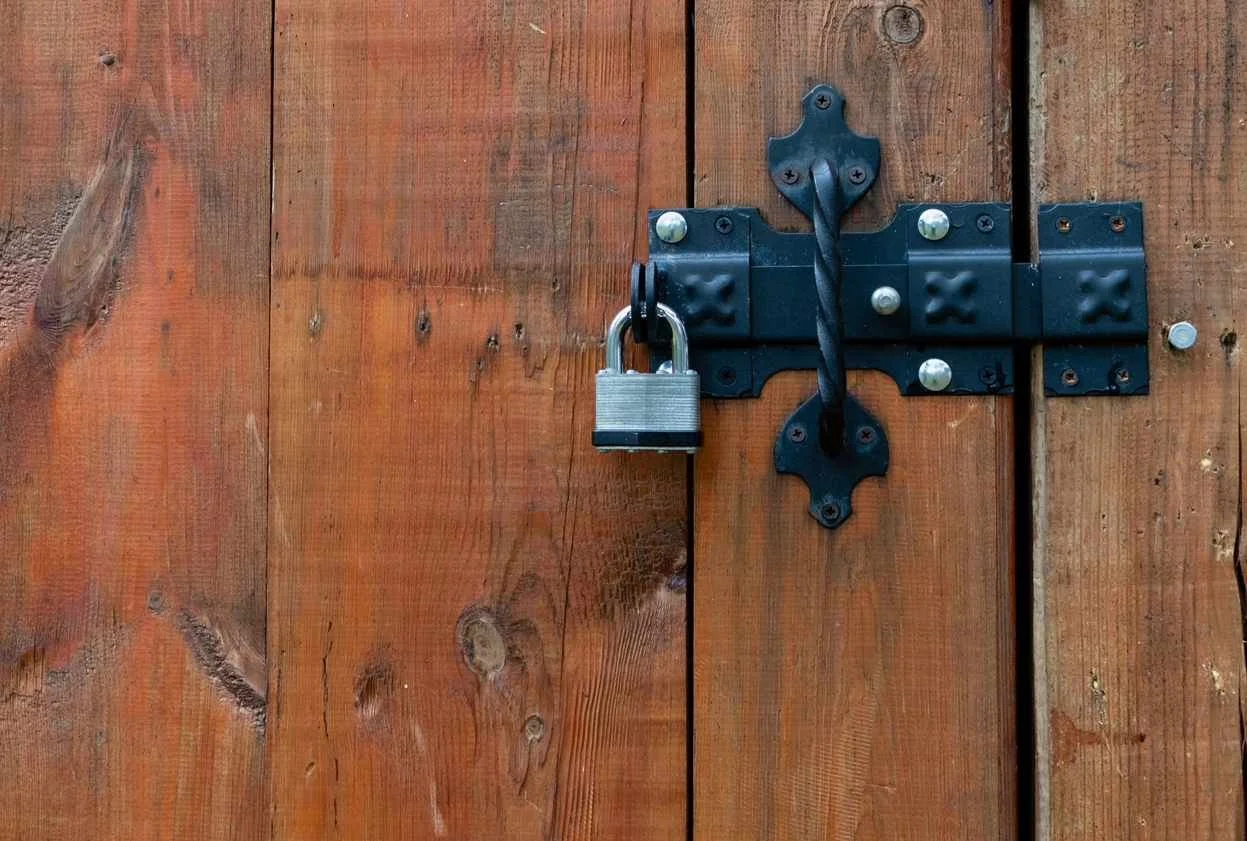
Choose a robust hasp designed for outdoor use and pair it with quality padlocks that resist cutting and tampering. Hidden-shackle padlocks are a strong option because they reduce access to the shackle and make bolt cutters less effective. The lock should be weather-resistant too, especially in Ontario conditions where rain, snow, salt, and freeze-thaw cycles can wear down cheaper hardware.
The hardware around the lock matters just as much as the lock itself. Long screws, reinforced strike plates, and heavy-duty hinges can increase the overall strength of the door assembly. If the hinge screws are short, an intruder may simply attack that side instead. Think of the door as a chain: the whole system is only as secure as its weakest link.
It is also important to keep the lock habit consistent. A surprising number of thefts happen because someone meant to come back in five minutes and left the shed door unlocked. Whether you are mowing the lawn, grabbing one tool, or stepping inside the house briefly, close and lock the shed. Security often comes down to routine more than technology.
Use Lighting and Visibility to Deter Intruders
Dark corners are an invitation. If your shed sits at the back of the yard, behind a fence, or near trees and shrubs, that location can give intruders privacy. One of the easiest ways to improve shed security is to remove that privacy.
Install motion-activated light fixtures near the shed door and any side with windows. A sudden burst of light changes the whole situation. It draws attention, reduces cover, and makes anyone approaching the shed feel exposed. Even a simple solar light can help, though wired or higher-output options usually provide more reliable coverage.
Trim landscaping around the shed so the view stays clear from the house, patio, or road where possible. Overgrown hedges may look nice, but they also create hiding places. Keeping the area open improves sightlines and makes it easier to check on the shed from a distance.
This is especially important during winter months in Southern Ontario, when it gets dark early and snowbanks can change how your yard is accessed. A shed tucked away behind a drift and a fence may feel out of sight, but to a thief, that can mean uninterrupted time. Good lighting and a clear line of view help stop problems before they start.
Consider Shed Alarms and Smart Security Devices
Modern shed security can go beyond locks and light. Shed alarms are now more affordable, easier to install, and far less complicated than many homeowners expect. Even a basic alarm that sounds when the door is opened can create enough noise and attention to send intruders running.
Some shed alarms are standalone battery-powered units, while others connect to a broader home security service. If you already use a security service for your house, ask whether your backyard shed can be included. Adding a contact sensor, motion detector, or camera may be simpler than you think.
Smart cameras can also be useful, especially if they send alerts to your phone. A camera does not physically stop theft, but it can improve awareness, provide evidence, and make your property less attractive to intruders. Cameras with motion-triggered recording, two-way sound, and night vision offer an extra layer of protection.
For homeowners who like connected systems, some devices now include app notifications, cloud storage, and status checks. In that sense, your security verification can happen in real time. You can check a page on your phone, confirm the camera feed, and see that verification successful means the shed is still secure. While terms like security verification, verification successful, and verifies may sound like website language, the same principle applies at home: a system that verifies what is happening gives you more control.
Anchor Valuable Items Inside the Shed
Even if someone gets in, you can still make theft harder. One of the smartest shed security strategies is to secure high-value equipment inside the building. Anchoring expensive tools, bikes, or machinery to the floor or wall adds another obstacle and more time for the intruder to deal with.
Use ground anchors, steel loops, or heavy-duty brackets designed for sheds, garages, or outdoor storage. These can be installed into a concrete pad or reinforced wood floor, depending on the setup. Once installed, you can lock bikes, generators, or equipment in place with hardened chains.
This extra step is crucial for items that are easy to move and expensive to replace. A thief may be able to unlock a weak door quickly, but hauling out a secured snow blower or chained-up bike is another matter entirely. The longer it takes, the more likely they are to stop and leave.
It also helps to organize the shed so valuables are not sitting right by the door. Do not leave your most expensive belongings in plain sight. Store them deeper inside, keep smaller tools in locked cabinets if possible, and avoid making the shed look filled with easy opportunities.
Protect Windows Without Losing Function
Windows are useful, but they can weaken shed security if they are not handled carefully. A window can give intruders a quick look at what is inside, and in some cases, a direct access point if the glass is easy to break.
Start by thinking about placement. If you are buying a new shed, consider where windows face. A window that looks toward the house is very different from one facing a hidden fence line. During the design stage, choosing the right location can improve both appearance and security.
If your shed already has windows, consider privacy film, interior coverings, or shatter-resistant upgrades. These steps help protect the contents while still allowing natural light into the space. You do not need to turn the shed into a bunker; you just want to reduce temptation.
Additionally, keep shelves and expensive equipment away from direct window view. If someone walks by and sees nothing but storage bins, garden supplies, or a folded ladder, the shed appears less attractive than one with a row of displayed power tools glowing in the afternoon light.
Do Not Ignore Digital Security if You Use Smart Devices
This might sound unusual in a post about sheds, but digital security has become part of modern shed security too. If your cameras, alarms, or smart locks connect through Wi-Fi, your website-style habits around passwords and account protection matter. A weak login can create a vulnerability just as surely as a weak door.
Use strong passwords, enable two-factor authentication where available, and keep device firmware updated. If your security service includes an app or online page, make sure only trusted users have access. In a connected system, digital access is still access.
You may see terms online like security verification, verification successful, verifies, respond ray id, malicious bots, bot traffic, waiting page, or website protection. Those terms usually belong to web security systems that verify whether a visitor is human before granting access to a website. But the lesson is surprisingly useful for homeowners too: good security is about filtering risk, verifying activity, and stopping suspicious behaviour before damage is done.
In the same way a website may use security verification to block malicious bots and require a browser to respond ray id checks before verification successful is displayed on the page, your physical shed security should create checkpoints. A visible lock verifies effort. A motion light verifies movement. Shed alarms verify entry. A camera verifies what happened. Layer by layer, the system becomes harder to defeat.
Match Security to Your Location and Use
Not every shed needs the same level of protection. A decorative garden shed with potting soil and hand tools has different security needs than a larger storage shed holding expensive landscaping equipment or contractor-grade tools. The best approach is to match your security plan to what the shed contains and where it is located.
If your property backs onto open green space, laneways, or a quiet road, you may want more visible deterrents. If the shed sits close to the home and is easily seen from the kitchen or patio, lighting and a good lock may cover most of your needs. In urban and suburban parts of the GTA, where lot lines are tighter, visibility can be both a benefit and a challenge.
Weather should also factor into your decisions. Hardware that works fine in mild conditions may seize up after freezing rain or corrode over time. Choose outdoor-rated components designed for Canadian weather, and check them seasonally. A lock that jams in January is not secure; it is just frustrating.
Simple Maintenance Makes a Big Difference
Security is not a one-time purchase. It needs occasional attention. Check your lock, hinges, windows, anchors, lights, and alarm batteries on a regular basis. A loose hasp, burned-out light, or warped door can quietly reduce your shed security without you noticing.
Walk around the shed every few months and look at it the way an intruder would. Is the door still aligned? Are there screws pulling out? Can windows be reached easily from a fence? Are valuables visible inside? This kind of check does not take much time, but it can help you spot weak points before someone else does.
It is also wise to review what is stored in the shed. As contents change, your security needs may change too. What started as a simple garden storage space can gradually become home to expensive tools, bikes, and seasonal equipment. The security plan should grow with the value of what you are keeping inside.
Final Thoughts on Shed Security
A good shed adds convenience, storage, and value to your property. Protecting that investment should be part of the plan from day one. Strong construction, a secure door, quality lock hardware, covered windows, smart lighting, and optional shed alarms all work together to reduce risk.
The goal is not perfection. It is to make your shed secure enough that intruders move on, your belongings stay protected, and you have peace of mind. Like a well-built fence or a solid front door, good shed security quietly does its job in the background.
If you are planning a new shed in Toronto, the GTA, or surrounding areas in Southern Ontario, it makes sense to start with a structure designed for durability and long-term performance. From there, the right security upgrades can help protect everything inside and keep your backyard investment working exactly the way it should.