
Weatherproof Sheds for Harsh Ontario Winters
Ontario winters do not politely test a backyard shed. They lean on it. They freeze, thaw, soak, drift, and whip wind-driven snow into every weak seam they can find. A shed that looks fine in September can become a headache by February if it was not built with real weather resistance in mind.
That is why a weatherproof shed matters so much for homeowners across the GTA and Southern Ontario. Whether you are storing snowblowers, patio furniture, tools, bikes, seasonal décor, or creating a backyard workspace, your shed has to do more than look good from the fence line. It has to hold up when the temperature dives, the roof takes on snow load, and moisture tries to creep in through the floor, walls, and roof.
At The Shed Company, weather resistance is not some decorative add-on. It starts with how a shed is framed, supported, sheathed, roofed, and installed. A shed built for Ontario has to be practical first. Good looks are important, of course, but a shed that cannot stand up to winter is like a stylish winter boot with a hole in the sole—nice to look at, miserable to live with.
Why Ontario Winters Are So Hard on Backyard Sheds
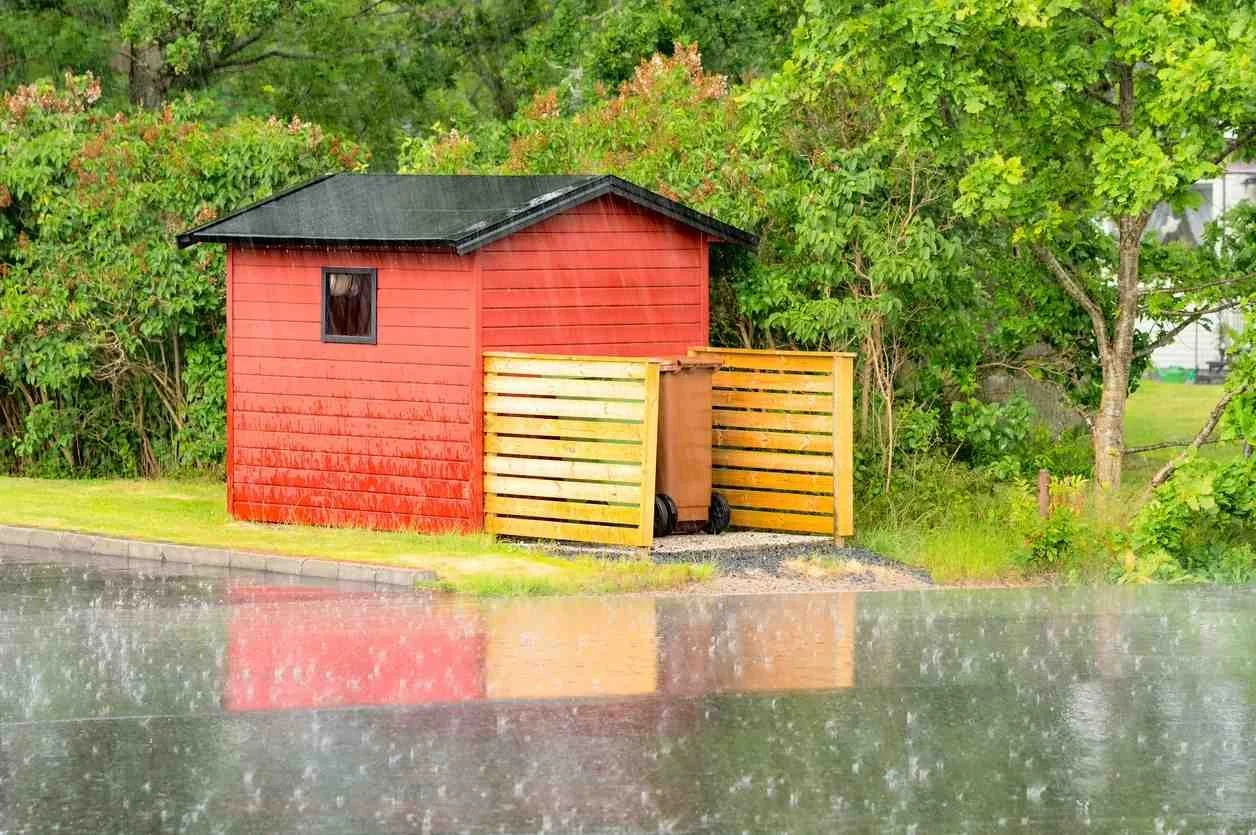
Ontario’s climate creates a perfect storm for shed wear and tear. It is not just the cold. It is the cycle. Snow piles up, melts slightly in the sun, refreezes at night, and repeats that pattern over and over. Moisture gets into tiny gaps, expands when frozen, and gradually turns small construction weaknesses into larger problems.
In the Toronto GTA and surrounding areas, homeowners also deal with wildly inconsistent winter conditions. One week can bring dry cold and hard winds. The next can dump heavy, wet snow that clings to a roof like soaked wool. Then comes a thaw, slush, and pooled water around the base. A truly weatherproof shed has to handle all of it without warping, leaking, sagging, or softening underfoot.
This is where build quality becomes obvious. Cheap sheds often fail at the points you cannot see in a photo: weak floor systems, poor roof sheathing, inadequate support underneath, or materials that do not respond well to constant moisture exposure. A shed may still be standing after a winter, but that does not mean it came through unscathed. Soft floor spots, roof wear, siding issues, and damp interiors often show up later.
What Makes a Shed Weatherproof?
A weatherproof shed is not defined by one magic material or a catchy sales phrase. It is the result of multiple parts working together. The base has to support the structure evenly. The floor has to resist ground moisture and carry weight. The walls have to be framed properly. The roof has to shed water and snow reliably. And the installation has to be done carefully so the whole structure performs as one system.
Think of it like winter clothing. A good coat alone is not enough if your boots leak and your gloves are useless. In the same way, a shed with attractive siding but a poor base is not truly weatherproof. The strength comes from the full assembly.
For Ontario homeowners, that means paying close attention to foundational support, pressure-treated components, wall framing, roof construction, and roofing materials. It also means understanding whether your shed is being built on-site properly and whether the design suits the intended use. Storage for a few rakes is one thing. Housing a snowblower, power tools, and expensive outdoor gear through a Southern Ontario winter is another.
The Importance of a Solid Shed Base
A weatherproof shed starts from the ground up. If the base is wrong, the rest of the structure is already fighting an uphill battle. Uneven support can lead to shifting, floor stress, door alignment issues, and places where water collects instead of draining away.
The Shed Company builds using a wood floor system it supplies, and can also build on a customer-supplied concrete pad using the correct dimensions. Their standard wood floor base includes evenly spaced 12-inch by 12-inch patio stones, 2x6 pressure-treated runners, pressure-treated 2x4 rim joists, spruce 2x4 floor joists, and 5/8 OSB floor sheathing. That layered support matters because it helps distribute the shed’s weight properly and keeps the structure stable.
In winter, this becomes even more important. Frozen ground can shift. Melting snow can saturate the surrounding area. A poorly supported shed may settle unevenly and create openings where cold air and moisture can get in. A properly built base gives the whole shed a better chance of staying square, dry, and dependable.
Why Pressure-Treated Materials Matter in Wet, Cold Conditions
Ontario winters are hard on any material sitting close to the ground. Snowbanks melt. Slush splashes. Moisture lingers longer in shaded backyards. That is why pressure-treated components are such a practical choice in the lower structure of a shed.
Pressure-treated runners and rim joists help defend against moisture-related deterioration where exposure risk is highest. This is not flashy, but it is exactly the kind of detail that separates a shed built for real-world conditions from one built to survive a showroom floor.
When homeowners search for a weatherproof shed, they are often thinking about roof leaks. Fair enough. But the lower structure deserves just as much attention. If the base and floor framing cannot deal with damp conditions, the shed can begin to fail from below while the roof gets all the credit. It is a bit like blaming a houseplant for dying in winter when the real problem was the cracked pot.
Shed Flooring and Winter Durability
The floor of a shed does more work than many people realize. It supports stored equipment, foot traffic, shelving, bins, and often heavy seasonal items like snowblowers or ride-on mowers. During winter, it also has to cope with tracked-in snow, melting ice, and fluctuating humidity.
The Shed Company’s standard 5/8 OSB floor sheathing provides a solid starting point, with upgrade options available such as ProStruct or plywood. For homeowners who know their shed will see heavy use or store weighty equipment, discussing floor upgrades can be a smart move. The right floor can help your shed feel sturdy underfoot instead of springy or vulnerable.
A weatherproof shed should not feel delicate in January. You should be able to open the door in boots, roll in equipment, and trust that the floor beneath you is doing its job. That confidence comes from the structure beneath the surface, not just what is visible at eye level.
Wall Framing That Holds Up Through Freeze-Thaw Cycles
Wall construction plays a major role in how a shed performs through winter. Standard 2x4 wall framing at 24 inches on centre is common, and upgrade options such as 16 inches on centre can provide additional rigidity. The Shed Company also uses engineered 8-inch OC pre-primed siding, which supports both appearance and durability.
In practical terms, stronger wall systems help the shed remain stable when weather conditions turn rough. Wind pressure, moisture exposure, and temperature swings all place stress on the structure. Better framing helps the shed stay square and solid, which in turn supports better door operation, siding performance, and overall longevity.
This matters because winter damage often starts quietly. A little movement here, a little expansion there, and suddenly a door sticks or a seam opens up enough to invite moisture. Good wall construction reduces the chance of those small annoyances becoming expensive repairs.
Roofing: The First Line of Defence Against Snow and Ice
If the base is the foundation of a weatherproof shed, the roof is the shield. In Ontario, shed roofs have to deal with snow accumulation, ice, wind, and prolonged wet conditions. A weak roof system can quickly become the point where trouble starts.
The Shed Company’s standard roof construction includes 2x4 roof joists at 24 inches on centre, 1/2-inch OSB sheathing, and 25-year asphalt shingles in black or brown. That combination offers dependable protection for many backyard applications, especially when installed properly.
Roofing is one of those areas where shortcuts tend to reveal themselves fast. Thin materials, poor installation, or low-quality shingles may not show immediate failure, but after enough freeze-thaw cycles, the problems emerge. Curling edges, water intrusion, and weakened structural points can all follow. A properly built roof helps move water off efficiently and stands up better to the weight and mess of winter weather.
Why Professional Installation Makes a Difference
A weatherproof shed is only as good as its installation. Materials can be solid on paper, but if the shed is rushed, built out of square, or poorly aligned to the site, winter will exploit every mistake.
One of the biggest advantages The Shed Company offers is professional installation included in the price. Smaller sheds are often built in one day, with larger models typically completed in two to three days. That speed is useful, but what matters more is the experience behind it. Fast does not help if corners are cut. Professional crews know how to build efficiently without sacrificing precision.
A shed installed correctly sits better, drains better, closes better, and lasts better. That is especially important in the GTA and Southern Ontario, where weather shifts can punish even minor construction flaws. A door that is just a little off in October can become a wrestling match by February.
Choosing the Right Weatherproof Shed for Your Backyard
Not every homeowner needs the same shed. Some want a straightforward storage building for tools and seasonal equipment. Others want a shed that doubles as a garden house, workshop, cabana-style retreat, or premium backyard feature. The right weatherproof shed depends on how you plan to use it year-round.
If your shed will hold expensive equipment, snow removal tools, or items sensitive to moisture, durability should be front and centre in your decision. Ask about flooring upgrades, framing options, roof materials, and site preparation. If aesthetics matter too, look for a builder who can balance curb appeal with structural quality instead of sacrificing one for the other.
A good shed should feel like it belongs in your yard, but it should also feel trustworthy. In winter, that trust is everything. You do not want to wonder whether the roof is handling the snow or whether the floor is taking on moisture. You want to open the door, grab what you need, and get back inside before your coffee gets cold.
Local Considerations for Toronto GTA and Southern Ontario Homeowners
Buying a shed in Ontario is not the same as buying one in a milder climate. Local weather patterns matter. So does local installation experience. A company that regularly builds across the Toronto GTA and surrounding areas understands the realities of snow load, moisture, freeze-thaw conditions, and varying backyard site challenges.
That local knowledge can shape better recommendations. A shaded lot may hold moisture longer. A more exposed property may deal with stronger winds. A suburban backyard with limited access may need thoughtful installation planning. These are not abstract details. They affect how your shed performs over time.
The Shed Company services the Toronto GTA and most of Southern Ontario, which means they are building for the actual conditions homeowners face here—not some generic idea of “Canadian weather.” That local relevance matters when you are investing in a structure expected to stand up to years of rough winters.
Maintenance Tips to Keep a Weatherproof Shed Performing Well
Even a well-built shed benefits from routine care. Weatherproof does not mean maintenance-free. It means your shed is built to resist the elements better, but you still need to give it basic attention.
After major snowfalls, it is wise to visually check the roof and surrounding drainage conditions. Keep snow from piling too high against the shed walls. Make sure water is not pooling around the base during thaws. Inspect shingles, siding, and door seals seasonally. If you notice minor issues, deal with them early. Winter has a way of taking a tiny flaw and stretching it into a larger one.
Inside the shed, organize items to promote airflow and avoid trapping dampness against walls or floor surfaces. If you store wet equipment, let it dry when possible rather than turning your shed into a sealed box of lingering moisture. A little prevention goes a long way.
Invest in a Shed Built for Real Winters
A weatherproof shed is not a luxury in Ontario. It is the sensible choice. Between snow, ice, slush, wind, and relentless freeze-thaw cycles, your shed needs to be built with real weather performance in mind from the start.
The Shed Company’s approach—solid base construction, pressure-treated lower framing components, dependable wall and roof systems, professional installation, and service across the Toronto GTA and Southern Ontario—speaks directly to what local homeowners actually need. A shed should look great in your backyard, yes, but it should also earn its keep in February when conditions are at their worst.
If you are planning a new backyard shed, think beyond size and colour. Ask how it is built. Ask what supports it. Ask how it handles winter. Because when the snow starts falling sideways and the temperature drops overnight, that is when the difference between an ordinary shed and a weatherproof shed becomes impossible to ignore.
Ready to invest in a shed built for Ontario conditions? Explore your options and choose a structure that will not just survive winter, but stand up to it with confidence.